The ultimate guide: how does an acoustic artwork improve office acoustics?
Many offices have a sleek visual design, but are acoustically unbalanced. Sound reflects off hard surfaces such as glass, concrete, and smooth walls.
THE ART OF INTERIOR » Plexiglas » What are the benefits of acoustic solutions for productivity, peace, and well-being in the office?
Sound has a significant impact on how people work. In offices with poor acoustics, employees experience stress, loss of concentration, and fatigue more quickly. Background noise, phone calls, and reverberation create a constant mental burden. Therefore, good office acoustics are not a luxury, but a fundamental requirement for a healthy and productive work environment.
Acoustic solutions reduce disruptive noise and create a calm working environment. This leads to:
By using sound-absorbing art such as acoustic wall panels, noise is reduced without closing off or dividing the space with physical partitions.
Acoustic art combines noise reduction with visual tranquility. Instead of bare or technical panels, choose wall decoration that adds atmosphere and absorbs sound.
This form of acoustic wall decoration is ideal for open workspaces, flexible offices, and concentration zones where focus is essential.
Research shows that pleasant acoustics in the workplace contribute significantly to employee well-being. Less noise means:
Sound-absorbing wall art not only supports productivity, but also the sustainability of organizations.
While traditional acoustic solutions are often overtly technical, acoustic artworks balance functionality and design. They enhance the office's appearance and contribute to a professional, polished impression for both employees and visitors. Thanks to our fully customized solutions, the color, size, and style can be fully coordinated with your interior and branding.

Many offices have a sleek visual design, but are acoustically unbalanced. Sound reflects off hard surfaces such as glass, concrete, and smooth walls.

In many modern office environments, noise is an underestimated problem. Hard materials such as glass, concrete, and smooth walls cause sound waves to be reflected.

Meeting rooms are often sterilely furnished with hard tables, glass walls, and smooth ceilings. This creates reverberation, causing voices to distort and conversations to consume more energy than necessary.
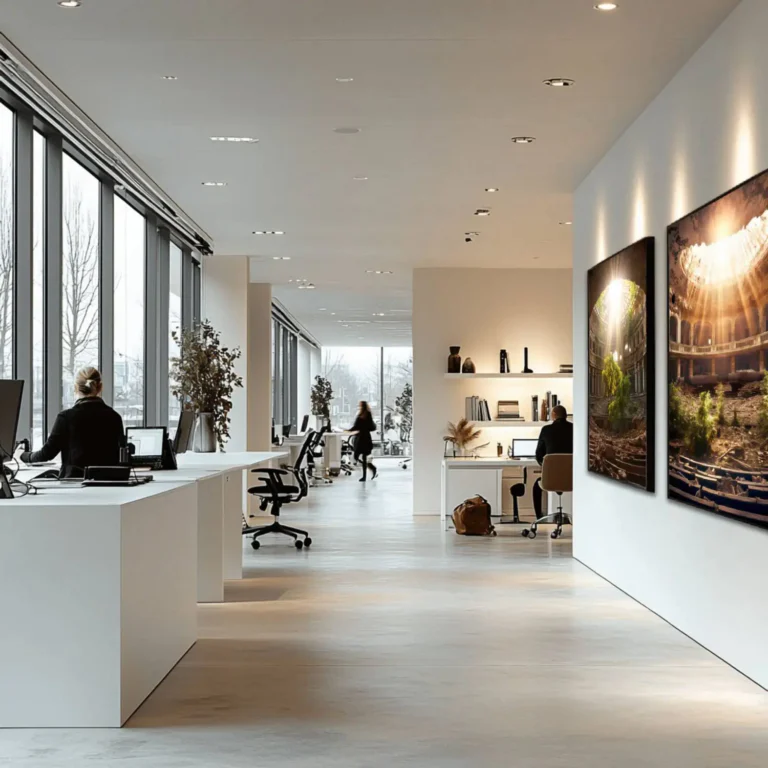
Many offices are designed with a focus on light, openness, and design. However, materials such as glass, concrete, and smooth walls amplify sound.